
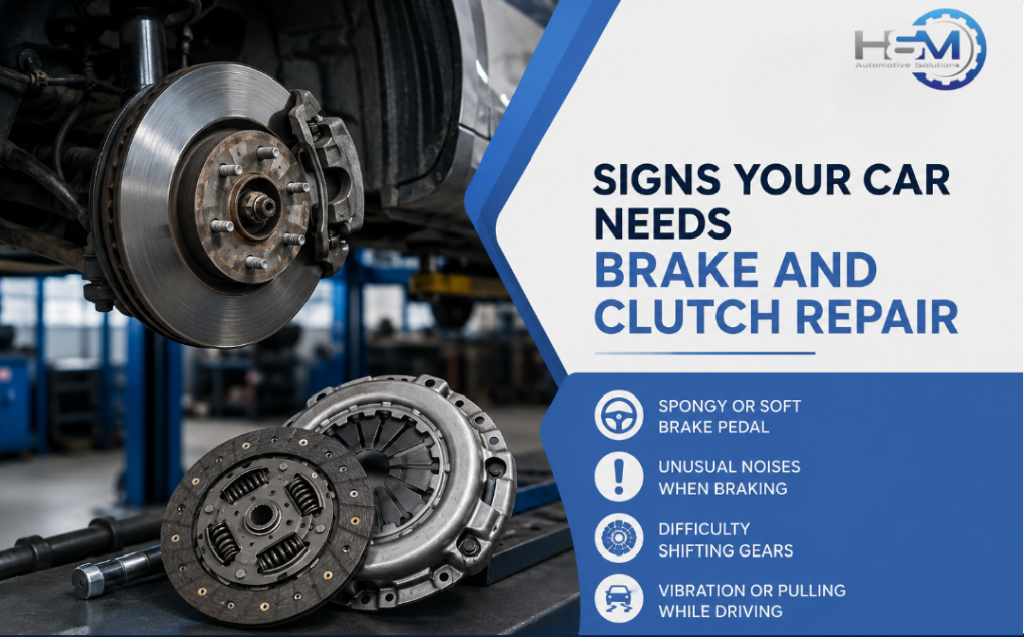
Most cars don’t fail overnight. Long before a brake pedal goes soft or a clutch stops biting properly, your car has usually been trying to tell you something: a squeal here, a vibration there, and a smell you can’t quite place. Learning the real signs you need brake and clutch repair means catching these clues early, before a simple fix turns into a tow truck call on the side of the Mitchell Motorway. It’s less about waiting for something to break and more about listening to what your car is already showing you.
At H&M Automotive Solutions in Malaga, we see the same pattern almost every week: a driver comes in saying, “It’s probably nothing,” and it turns out to be precisely the kind of thing that’s much cheaper to fix now than in three weeks. Below, we’ve broken down 6 critical signs and steps worth paying attention to: why these problems start, what to actually look and listen for, and what happens once you bring your car in for a proper look.
1. Why Do Brake and Clutch Problems Happen?
Brakes and clutches both rely on friction pads gripping rotors and a clutch plate gripping the flywheel, and friction material doesn’t last forever. Every stop, every gear change, wears these components down a little more. In many vehicles, the brake and clutch pedal also draw from the same hydraulic fluid reservoir, so a leak or contamination on one side can quietly affect the other. That’s why a spongy clutch pedal and a soft brake pedal sometimes show up around the same time; it’s rarely a coincidence.
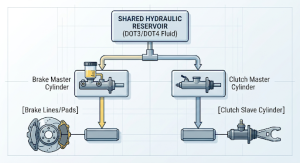
Perth’s driving conditions don’t help either. Stop-start traffic along routes like Beach Road or Alexander Drive means constant clutch engagement and repeated braking. Summer heat above 35°C puts extra thermal stress on hydraulic fluid, and towing or hill driving through the Perth Hills adds load that speeds up wear on both systems. None of this is unusual; it’s just Perth driving, but it does mean local cars often need these checks a little sooner than the manual suggests.
2. 9 Brake Warning Signs You Shouldn’t Ignore
Catching brake wear early keeps minor maintenance from turning into major rotor replacements:
- Squealing or screeching is usually the pad’s built-in wear indicator, letting you know the friction material is running low.
- Grinding, metal-on-metal noise: This situation is urgent. It usually means the pad is gone and metal is now scraping the rotor.
- A soft, spongy or sinking pedal often points to air in the lines, a fluid leak, or a failing master cylinder.
- Vibration or shuddering when braking, commonly caused by warped or unevenly worn rotors.
- The car pulling to one side can mean a sticking calliper, a collapsed brake hose, or uneven pad wear.
- Longer stopping distances are a gradual sign that pads, rotors or fluid quality have degraded.
- A dashboard brake warning light: Don’t just top up the fluid; find out why the level dropped.
- A burning smell after braking can indicate overheated pads or a calliper that isn’t releasing properly.
- Braking feels different, or fuel use has crept up: Subtler signs that a calliper may be dragging or the whole system isn’t working as efficiently as it should.
3. 8 Clutch Warning Signs You Must Watch For
Your clutch links engine power to your gearbox. Watch out for these subtle signs:
- Clutch slipping: The engine revs climb, but the car doesn’t pick up speed the way it should, especially noticeable when accelerating or towing.
- Difficulty shifting or grinding gears often means the clutch isn’t fully disengaging.
- A burning smell, particularly after stop-start driving or a steep start, is a sign of a slipping or overheating clutch plate.
- A spongy or stuck pedal, usually hydraulic: Air in the line or a failing master or slave cylinder.
- Rough or jerky gear changes, or a judder when taking off from a standstill.
- A noisy clutch pedal squeaking or grinding when pressed can point to a worn release bearing.
- Vibration when taking off, which can suggest an uneven pressure plate or worn disc.
- The pedal just feels wrong: A noticeably different bite point or a pedal that feels lighter or heavier than usual is worth mentioning to your mechanic even if nothing else seems off.
4. Why You Shouldn’t Wait to Get Repairs Done
It’s tempting to put off a car repair, especially when the car still “seems to drive fine”. But brake and clutch faults rarely improve on their own; they tend to get worse, often faster than people expect. A squealing pad ignored for a few more weeks can turn into scored rotors that need replacing instead of resurfacing. A slipping clutch left alone can burn out the friction plate entirely, turning a clutch kit job into a much bigger bill.
There’s also a legal side to this in Western Australia, where faults like spongy brakes or worn steering components are treated as safety issues that can affect your vehicle’s roadworthiness. On top of that, mechanical faults are a genuine contributor to crashes on WA roads, which is really the whole point of catching these signs early; it’s about safety first and your wallet second.
5. What’s Involved in a Brake or Clutch Repair?
| Step | What Happens |
| Inspection | Pad and disc thickness checked, fluid condition assessed, clutch engagement tested |
| Diagnosis | The mechanic identifies the actual cause: worn parts, hydraulic leak, or something else entirely |
| Quote | You’re given a clear breakdown before any work starts |
| Repair | Parts replaced or serviced: pads, rotors, clutch kit, hydraulic components as needed |
| Test drive | Confirms the fix has resolved the original symptom before handover |
Most brake jobs are straightforward and can be done in a matter of hours. Clutch replacements take longer, since the transmission usually needs to come out, but a proper diagnosis upfront means you’re not paying for guesswork.
6. How H&M Automotive Solutions Can Help
This situation is where having a trusted local workshop actually matters. At H&M Automotive Solutions in Malaga, every brake and clutch job is carried out using approved-grade parts and fluids, following the same service standards your manufacturer would expect, so servicing with us won’t void your new-car warranty. We stamp and sign your logbook after every visit, run a multi-point safety check alongside the specific repair, and back our work with a workmanship guarantee.
Whether it’s a quick brake pad swap or a full clutch kit replacement, our team will walk you through what we found, what it’ll cost, and why: no guesswork, no pressure. You can see the full range of what we cover on our Services & Repairs page or book a service directly if you’re already noticing one of the signs above. If you’re not sure what’s going on, give us a call or drop by. We’re on Hunt St in Malaga and happy to take a look.
Recognised the Signs? Get Your Brakes & Clutch Checked Today
A squeal, a soft pedal, a slip in the clutch none of these is things to just live with. Caught early, most brake and clutch issues are a straightforward, affordable fix. Left alone, they tend to turn into bigger jobs, longer downtime, and a much bigger bill. The safest move is always the same: get it checked out properly, as soon as possible.
That’s precisely what H&M Automotive Solutions is here for. Based in Malaga and trusted across Perth, our certified mechanics inspect, diagnose and repair brakes and clutches on all makes and models, using approved-grade parts, warranty-safe servicing, and a workmanship guarantee on every job.
If you’ve noticed any of the signs above, don’t wait for them to get worse; book a service with H&M Automotive Solutions today, or call us on 08 9511 4919 to talk through what you’re experiencing.
FAQs
How long do brake pads and rotors usually last?
Pads typically need replacement every 30,000–70,000 km, while rotors last much longer. Frequent stop-start driving and towing accelerate this wear.
What are the first signs of clutch failure?
Early indicators include a shifting pedal bite point, slight slippage when under load, or extra resistance when changing gears.
Can a clutch fail suddenly without warning?
Complete sudden failure is rare; clutches almost always display early warning signs like slipping or burning smells beforehand.
Can bad brakes affect the clutch?
Yes, in vehicles using a shared fluid reservoir, a leak or low fluid level on one side directly impacts the other system’s pressure.
What can be mistaken for a bad clutch?
Faulty engine mounts, low transmission fluid, or internal gearbox synchroniser wear can closely mimic clutch slip.